Prepare Your Property Before Storm Season Arrives
Severe weather can arrive with little warning, making it important to evaluate your property before storm season begins. A little preventative maintenance can help reduce potential damage, improve safety, and make cleanup easier if high winds, heavy rain, or snow affect your area.
Start With a Property Walkaround
Take time to inspect your trees, landscaping, and structures for potential hazards. Look for:
- Dead or damaged branches
- Trees with noticeable lean or visible cracks
- Limbs extending over roofs, driveways, or outdoor living spaces
- Vegetation growing near utility lines
- Debris buildup in gutters and drainage areas
Addressing concerns early can help reduce the risk of fallen limbs and other storm-related issues. If a tree appears unhealthy or unstable, consider consulting a certified arborist for a professional assessment.
Create a Storm Cleanup Plan
After a storm passes, safety should be the first priority. Before beginning any cleanup:
- Stay clear of downed power lines.
- Watch for broken branches that may still be suspended overhead.
- Inspect trees for structural damage before cutting or pruning.
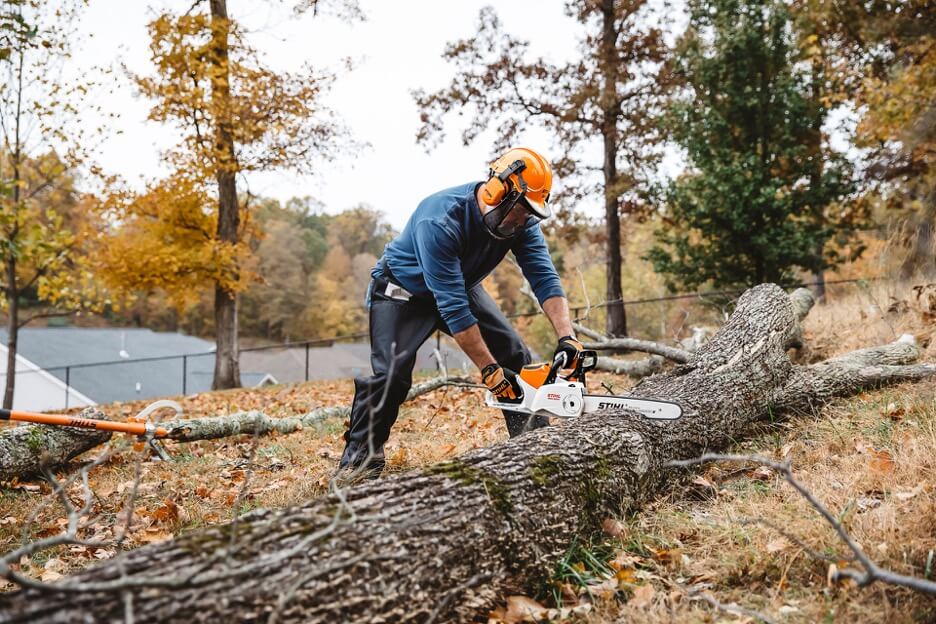
- Wear appropriate protective equipment when operating outdoor power tools.
For homeowners handling routine cleanup and fallen branches, battery-powered chainsaws offer a quieter, low-maintenance solution that can be convenient to keep ready throughout storm season. STIHL’s AK System includes homeowner-focused options such as the MSA 60 C-B and MSA 70 C-B, both designed for property maintenance, pruning, and light storm cleanup.
For larger properties or more demanding cleanup tasks, the MSA 220 C-B from the STIHL ALLPRO system delivers increased cutting performance for heavy-duty work.
Know When to Call a Professional
Not every cleanup project is a DIY job. Trees under tension, large hanging limbs, uprooted trees, and any work involving utility lines should be handled by trained professionals. Storm-damaged trees can contain hidden hazards that make cutting unpredictable and dangerous.
Planning ahead, maintaining your trees, and having the right tools available can help you recover more efficiently after severe weather while keeping your property safer year-round.